






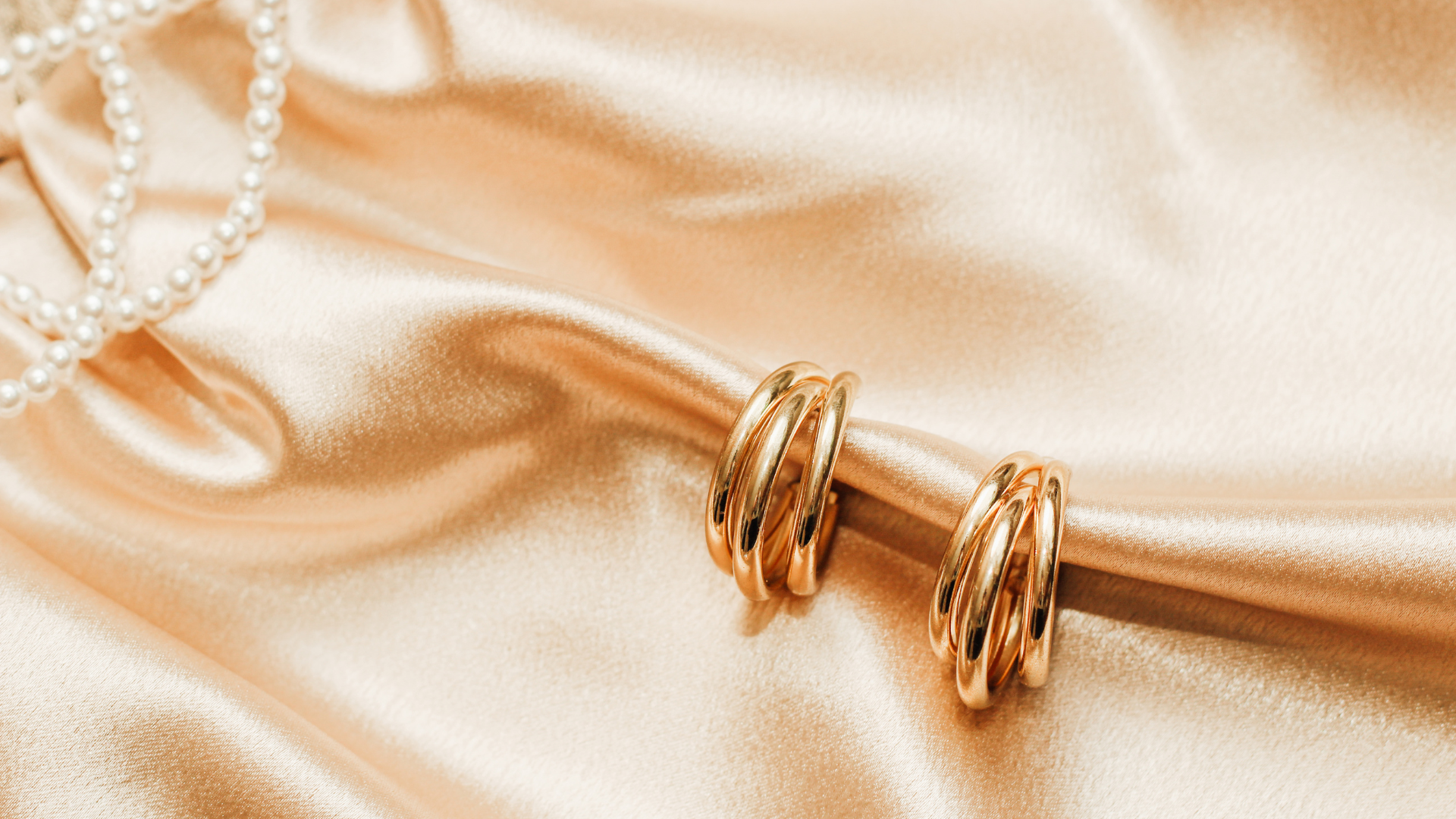
Gold filled jewelry occupies a unique position in the world of fine adornment. Neither fully solid gold nor a simple surface treatment, it is often misunderstood, oversimplified, or incorrectly compared to gold plated alternatives. Yet gold filled is not a marketing invention or a secondary option. It is a technically defined material, governed by precise standards and chosen for its durability, wearability, and material honesty.
To understand what gold filled jewelry truly is, it is necessary to move beyond appearances and examine how it is made, how it behaves over time, and why it continues to be used by artisans who value longevity over immediacy.
What Is Gold Filled Jewelry?
Gold filled jewelry is created using a manufacturing process in which a thick layer of solid gold is permanently bonded to a base metal, most commonly brass. This bonding is achieved through heat and mechanical pressure, resulting in a composite metal that behaves as a single material rather than a coated surface.
In the United States, where the term is legally defined, an item may only be described as gold filled if the gold content represents at least 1/20 of the total weight of the piece, or 5 percent. This requirement is fundamental. It ensures that the gold layer is substantial enough to resist wear from friction, handling, and daily use.
Gold filled jewelry therefore contains significantly more gold than gold plated jewelry and must meet clear material standards. It is not a finish applied after the fact, but a construction choice made at the very beginning of the manufacturing process.
How Gold Filled Jewelry Is Made
The process used to create gold filled metal belongs to traditional metallurgy rather than decorative surface treatment.
Sheets of solid gold, typically 12k or 14k, are bonded to a core metal under intense heat and pressure. The metals fuse at a molecular level, creating a durable bond that does not separate, peel, or flake. Once bonded, the resulting metal can be rolled into sheets or drawn into wires, allowing it to be worked using standard jewelry-making techniques.
This is a critical distinction. Because gold filled material can be cut, soldered, textured, and shaped like solid metal, it offers artisans a high level of control and predictability. The gold layer remains intact throughout the fabrication process, even in areas exposed to friction or repeated contact.
Gold filled jewelry is therefore not assembled from coated components. It is formed from a unified material designed to withstand time.
Gold Filled vs Gold Plated Jewelry
The difference between gold filled and gold plated jewelry is structural, not cosmetic.
Gold plated jewelry is produced by applying an extremely thin layer of gold onto a base metal through electroplating. This layer is often measured in microns and is designed primarily to provide the appearance of gold at a lower cost. Over time, this surface layer inevitably wears away, revealing the base metal underneath.
Gold filled jewelry, by contrast, contains up to one hundred times more gold than gold plated jewelry. The gold is not deposited onto the surface but bonded as a thick layer that becomes part of the metal itself.
This difference directly affects durability. While gold plated jewelry may lose its appearance within months of regular wear, gold filled jewelry is designed to last for years, often decades, without exposing the core metal.
The distinction is also philosophical. Gold plating prioritizes immediate visual impact. Gold filled prioritizes material integrity and long-term wearability.
Gold Filled vs Solid Gold Jewelry
Gold filled jewelry is sometimes presented as an alternative to solid gold, but the comparison is often misleading.
Solid gold jewelry is made entirely of gold alloy and offers unparalleled permanence and intrinsic value. It has historically been associated with wealth preservation, heirloom pieces, and long-term investment.
Gold filled jewelry serves a different purpose. By combining a solid gold exterior with a supporting core metal, it offers greater structural strength, lighter weight, and increased accessibility. This allows for larger forms, more sculptural designs, and everyday wear without the constraints of solid gold’s density and cost.
For artisans, gold filled provides creative freedom while maintaining a genuine gold surface. It is not an imitation of solid gold, but a distinct material category chosen intentionally for its properties.
How Long Does Gold Filled Jewelry Last?
One of the most common questions surrounding gold filled jewelry concerns its lifespan.
With proper care, gold filled jewelry can last several decades, even when worn frequently. Because the gold layer is thick and mechanically bonded, it does not rub off easily and does not degrade in the same way as plated jewelry.
Rather than deteriorating abruptly, gold filled jewelry ages gradually. Over time, it may develop a subtle patina that reflects use and contact, not damage. This evolution is often considered part of the piece’s character, reinforcing its presence rather than diminishing it.
This long lifespan makes gold filled jewelry particularly suitable for pieces intended to be worn daily, such as necklaces, earrings, and rings.
Is Gold Filled Jewelry Waterproof?
Gold filled jewelry is far more resistant to water than gold plated alternatives. Occasional exposure to water, including hand washing or brief contact with rain, will not damage it.
That said, durability should not be confused with invulnerability. Prolonged exposure to salt water, harsh cleaning products, or chemical agents can affect any metal over time, including gold filled.
Gold filled jewelry is designed to accompany everyday life, not to be subjected to constant chemical stress. Respecting the material ensures its longevity.
Is Gold Filled Jewelry Hypoallergenic?
Gold filled jewelry is often suitable for people with sensitive skin. The thick gold layer prevents direct contact between the skin and the base metal, reducing the risk of irritation.
While individual sensitivities vary, gold filled jewelry is generally better tolerated than gold plated jewelry, where the thin gold layer wears away quickly and exposes the underlying metal.
For many wearers, this makes gold filled a reliable choice for long-term, daily use.
Caring for Gold Filled Jewelry
Maintaining gold filled jewelry is simple and does not require specialized treatments.
A soft, dry cloth is usually sufficient to restore shine. When deeper cleaning is needed, mild soap and lukewarm water can be used, followed by thorough drying. Abrasive cleaners and aggressive polishing should be avoided, as they are unnecessary and may reduce the lifespan of the gold surface.
This combination of durability and material stability explains why gold filled jewelry has remained relevant across generations, despite changes in fashion cycles and consumer habits. Its continued use is not driven by trend, but by function, reliability, and the demands of real wear.
Why Artisans Choose Gold Filled Jewelry Today
For contemporary artisans committed to quality and longevity, gold filled jewelry represents a deliberate material choice rather than a compromise. It offers a balance between expressive freedom and technical discipline, allowing makers to focus on form, proportion, and detail without sacrificing durability.
Gold filled metal behaves consistently under tools. It can be sawn, soldered, textured, and polished with precision, enabling complex constructions that would be impractical or prohibitively expensive in solid gold. This reliability is particularly important in small-scale production, where each piece is worked individually rather than mass-produced.
By choosing gold filled, artisans prioritize how a piece will live over time, not just how it appears at the moment of purchase. The material supports jewelry designed to be worn repeatedly, integrated into daily life, and retained for years rather than replaced.
Gold Filled Jewelry and the Question of Value
Value in jewelry is often reduced to metal weight or resale potential. Gold filled challenges this narrow definition.
While it does not carry the intrinsic investment value of solid gold, gold filled jewelry offers functional value that is often overlooked: longevity, resistance to wear, and stability of appearance. For many wearers, these qualities are more relevant than resale considerations.
Gold filled jewelry also allows access to genuine gold surfaces without encouraging excess. It reflects a form of restraint, where value is expressed through material intelligence and craftsmanship rather than accumulation.
This positioning makes gold filled particularly relevant in a context where consumers increasingly question disposable goods and seek objects that justify their presence over time.
Gold Filled Jewelry in Contemporary Fine Jewelry
Gold filled jewelry occupies a quiet but important place in contemporary fine jewelry. It is often used by independent houses and ateliers that operate outside industrial luxury models, where production volumes are limited and craftsmanship is central.
In these contexts, gold filled is not presented as an alternative to fine jewelry, but as a different expression of it. It enables pieces that are substantial in form yet wearable, refined yet resilient.
This approach contrasts sharply with fast fashion jewelry, where materials are chosen for immediate visual effect and minimal cost. Gold filled, by design, resists that logic. Its production requires technical knowledge, proper sourcing, and respect for material standards.
As a result, gold filled jewelry tends to be associated with makers who value consistency, transparency, and long-term relationships with their audience.
Sustainability and Responsible Production
The question of sustainability in jewelry cannot be reduced to a single material. However, gold filled jewelry aligns with several principles of responsible production.
Because it is designed to last, gold filled jewelry inherently reduces the need for frequent replacement. Fewer discarded pieces mean less material waste and less demand for repeated manufacturing cycles.
Gold filled also uses significantly less gold than solid gold pieces of comparable size, while maintaining a genuine gold surface. This efficient use of precious metal can be seen as a form of material restraint, particularly when paired with artisanal, small-batch production.
When created by workshops that prioritize ethical sourcing and controlled production, gold filled jewelry fits naturally into a broader philosophy of longevity and responsibility.
Common Misconceptions About Gold Filled Jewelry
Despite its defined standards, gold filled jewelry is often misunderstood.
One common misconception is that gold filled jewelry is simply a higher-quality version of gold plating. As established, the two are fundamentally different in construction, gold content, and lifespan.
Another misconception is that gold filled jewelry is fragile or temporary. In reality, when properly made, it is one of the most durable options available outside of solid gold.
There is also a tendency to view gold filled as inferior because it is not solid gold. This perspective overlooks the purpose of the material. Gold filled is not intended to replace solid gold, but to serve a different function, one that emphasizes wearability, accessibility, and continuity.
Understanding these distinctions allows wearers to make informed choices rather than relying on assumptions.
Who Is Gold Filled Jewelry For?
Gold filled jewelry is particularly well suited for individuals who wear their jewelry regularly and expect it to withstand daily life. It appeals to those who value material honesty and prefer objects that age gracefully rather than deteriorate quickly.
It is also relevant for those who appreciate craftsmanship but do not seek ostentation. Gold filled jewelry does not rely on excess to assert its presence. Its value is subtle, rooted in how it performs over time.
For many, gold filled jewelry becomes a long-term companion rather than a seasonal accessory.
The Role of Transparency in Jewelry Materials
One of the defining qualities of gold filled jewelry is its clarity. The material is governed by measurable standards, and its properties can be explained without ambiguity.
This transparency stands in contrast to vague descriptors often used in jewelry marketing, where terms like “gold tone” or “gold finish” obscure material reality.
Clear language about materials builds trust. It allows wearers to understand what they are buying, how it was made, and how it should be cared for. In this sense, gold filled jewelry supports a more honest relationship between maker and wearer.
Final Perspective on Gold Filled Jewelry
Gold filled jewelry is neither a shortcut nor a compromise. It is a material choice rooted in technique, designed for durability, and aligned with a philosophy of long-term wear.
Understanding what gold filled jewelry is means recognizing that value in jewelry does not exist solely in purity or price, but in how a piece is made, how it performs, and how long it remains meaningful.
In a market increasingly dominated by surface narratives, gold filled jewelry offers something quieter and more substantial: objects designed to last, made with intention, and worn without precaution.
Care, in this context, is not about preservation in isolation, but about supporting continuity over time.